

Genre Conventions


The zombie genre
The zombie genre has existed since its inception through George Romero's "night of the living dead in 1968. His work pioneered a much loved genre that has increased in popularity with Wikipedia listing 582 different movies under the genre. It has been redone and retold so many times that they can all share similarities through character roles and narrative conventions.
Character roles:
In the examples of Shaun of the dead and Zombieland, the sole villain of both films is just the zombie outbreak. Whilst in other forms of this genre, you will see "sub-villains" that may take the centre stage as a main threat (for example, Abby from the last of us part 2 is the villain for Ellie's half of the game) but there is still a majority of the threat coming from the zombies in the background.
Mise-en-scene
The genre is packed full of similarities in its set design, costume, and lighting. It helps to establish the genre and its themes that are often repeated throughout all iterations of the genre.
In set design we often see run down, overgrown, and desolate buildings that reflect the abandoned nature of a post apocalyptic world. This is more common in media that is set far into an outbreak (like the last of us) rather than one that centres around outbreak day (Like Shaun of the dead). The set design emphasizes the desolation and destruction caused by the zombie apocalypse, adding to the sense of dread and hopelessness.
Costume also offers many similarities through the idea that in a zombie-infested world, characters probably wouldn't have access to their extensive wardrobes that they might have had pre-outbreak. This doesn't just apply to the humans either, as most zombie media will stick to that stereotypical zombie look (green skin, drool, blood etc.) through the use of makeup. But as well as this you will often see the producers ripping up old clothes and fitting them on the zombie's actors.
Lighting is a more obvious similarity as most media will proritise low-key lighting over high-key as it better reflects the mood that will dominate most zombie media.
Cinematography
In the horror genre in general you'll see similar shot types and editing techniques that are useful in creating suspense and horror. Shaky cam and quick cuts are often perfect at highlighting the horrifying aspects of zombie films like in a chase scene it makes sense to replicate the sense of running away from danger through the camerawork. Zombie films also like to use hand held shots that mimic the idea of being in the apocalypse setting with these characters. These tend to be used in more serious entries to the genre as they help add to the personality of characters that is much more important when there is a serious story being told.

The comedy genre
The comedy genre is obviously in great contrast to the zombie genre, but with equally as many iterations they are bound to share some similarities.
Character roles
Like with every piece of narrative media, there is a protagonist. This is the main character around whom the story revolves. The protagonist in a comedy film is often placed in absurd or challenging situations, and their reactions to these circumstances generate humour. For example, Jim Carrey in "The Mask". Along with them you might see characters like the sidekick/fool, the love interest, and even sometimes an antagonist.
Mise en scene
Often in set design, producers will place the characters in inherently humourous settings, which can sometimes be a very bland setting (for example the office) where unexpected things will happen and it will add to the comedy.
Costumes can play a significant role in comedy, especially in 'slapstick' or physical humour. Exaggerated costumes or costumes that are incorporated with the character's personality can be amusing. Makeup may also be used to create funny and exaggerated looks (again like in Jim Carey's mask).
Bright, vibrant colours are commonly used in comedies to create a lively and energetic atmosphere settings like Las Vegas in the hangover. Lighting may be used to highlight certain elements or characters, drawing attention to comedic situations.
Comparisons
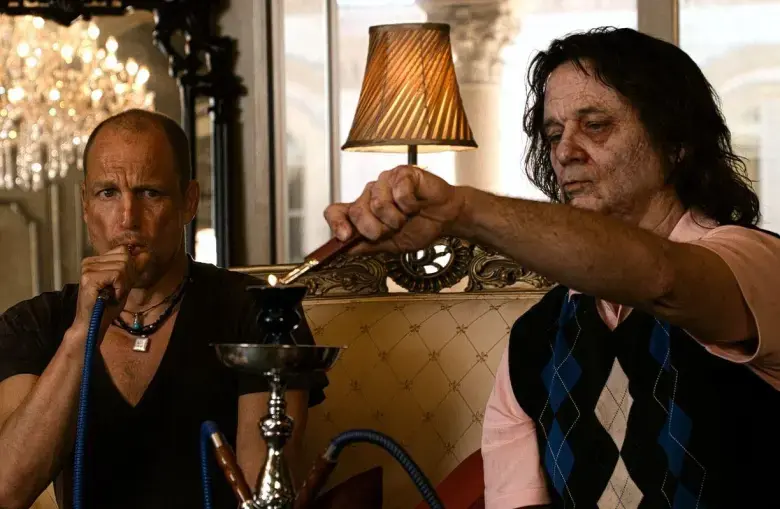
Whilst often combined, there are many instances of two separate movies sharing similar features. Both genres can be vehicles for satire. Zombie stories sometimes satirize societal issues, such as consumerism, conformity, or government incompetence like in most instances of governments failing to contain the virus/infection of that universe (for example the walking dead). Likewise, comedy often uses satire to comment on social, political, or cultural issues by presenting them in a humorous and exaggerated light, which often results in controversy especially in older content. Both genres often rely on exaggeration for comedic effect. Zombies, with their slow and relentless pursuit of human flesh often make the audience laugh when the characters are caught out as they believe they would easily be able to outrun the threat. Similarly, comedy often involves exaggerating real-life situations, characters, or behaviours for comedic effect.
Overall the similarities between these two genres was enough to create the hybrid genre of 'zom-com' that has become well loved today.
Back to top