
Rules and regulations
All films in the UK are regulated by the BBFC (British Board of Film Classification). They are given an age rating which tells people who can watch what film:
U- Universal, anyone can watch
PG- Parental guidance, Anyone can watch but parents should be aware of some mature themes
12A- People are advised to be 12 and over, but parents can accompany those below the age of 12
12- People aged 12 and over can watch
15- People aged 15 and over can watch
18- People aged 18 and over can watch
The BBFC's role in film is incredibly important as it allows
parents to shield their children from harmful and inappropriate
content.
For Dune, it was given a 12A rating, and to do this they do not
show any majour gore like when people are killed by the
sandworms for example. Characters dying off screen is a big way
films like to manage their age ratings, like in Jurassic park, where
characters like Nedry, who have much more violent deaths in the book, are killed off camera so that they can achieve lower age ratings, meaning that they can get a larger viewer base and therefore have a higher profit when the film is released.
However, some films may suffer from producers purposefully trying to lower the age rating, for example the five nights at Freddy's movie (2023) which many of the loyal fans were hoping would be a lot more gory and violent, and it ended up being a lot more childish that some were hoping.


Laws relating to film
All information collected from the Gov.UK website
The working time directive
This states that you are not able to work more than 48 hours a week on average across 17 weeks. There are some exceptions for example if you are in the armed forces or have a job where 24 hour staffing is required.
This law has helped to ensure that companies do not overwork their employees, and thus they remain productive and not burnt out.
Child working laws
The youngest age a child can work part-time is 13, except children involved in areas like: television, theatre, modelling
Children working in these areas will need a performance licence.
Children can only start full-time work once they’ve reached the minimum school leaving age - they can then work up to a maximum of 40 hours a week.
Once someone reaches 16, you may need to pay them through PAYE.
Once someone reaches 18, adult employment rights and rules then apply.
This ensures that children are not exploited in the workplace and can be kept from working full hours when it is not healthy for them to do so.
Dune featured some child actors, however their roles were very minor.
Animal firm laws
If you are responsible for the animal on set, it is your duty to tend to its needs.
If no one already involved is well versed in animal care, filmmakers should speak to an experienced and competent animal welfare adviser.
Productions are not legally required to have a vet on set, but it is advisable for higher-risk productions, such as those involving multiple animals or stunt work.
This ensures that animals are not exploited to do things in films that a human may not be able to perform, but also works out so animals can be utilized in as many ways as ethically possible.
There were no animals in Dune, so the producers did not have to consider these laws
Copyright laws
Copyright protects your work and stops others from using it without your permission. You automatically get copyright protection when you create:
-
original literary, dramatic, musical and artistic work, including illustration and photography
-
original non-literary written work, such as software, web content and databases
-
sound and music recordings
-
film and television recordings
-
broadcasts
-
the layout of published editions of written, dramatic and musical works
You can mark your work with the copyright symbol (©), your name and the year of creation. Whether you mark the work or not doesn’t affect the level of protection you have.
As the film is based on the book by Frank Herbert, this would have incurred costs as Dune is a copyrighted title. Denis Villeneuve expressed his desires to make the film and was signed on as director in 2017 when Legendary picture acquired the rights a year earlier, and then began production in early 2019.
Actors/workers rights
Property law
Insurance law
Risk assessment
Actors and crew have the same rights as any other worker.
When you hire them, they sign a contract that outlines their duties as well as what times they are expected to work and their pay.
Contracts make them legally obliged to fulfil the role you have hired them for, meaning that if they decide to go off the rails, you have legal grounds to sue them.
All land that is privately owned requires permission from the land owner to film on it. If not, then the land owner has rights to stop you from filming and kick you off their property.
This makes sure that film directors don't trespass onto private land without permission.
Dune was largely filmed on location in the Wadi Rum desert as well as other locations, which they had acquired permission to use.
Film sets can be very dangerous places, therefore all staff need to be insured on incase of an accident.
This means that if something does unfortunately go wrong, then there are no lengthy legal processes and if equipment is damaged, there can be money saved.
With all the stunts and battle scenes present in Dune, there would have been lots of things in place to make sure no one was held responsible for injuries on set.
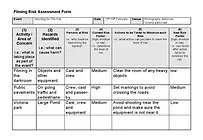
This is where on-set planning needs to be put in place to ensure that there are no accidents, this includes the regulation of prop firearms and making sure that any dangerous animals cannot escape and hurt anyone.
For example, on the set of Rust, the infamous incident involving Alec Baldwin and the live rounds in a gun on set. There was minimal risk assessment which resulted in the sentences of two crew members and an active case with Alec Baldwin. Because of this, filming has been halted until further notice, and it is likely that with the controversy surrounding the film if it ever releases, it will not do very well.
Overall, each law will have its effects on film production, as they make the producers think about what they can and can't do. Without them, film sets would be dangerous places that would not be fit for work.
Some of these laws that affected Dune's production were copyright laws, as the film is based on the book by Frank Herbert. This would have incurred costs as Dune is a copyrighted title. Denis Villeneuve expressed his desires to make the film and was signed on as director in 2017 when Legendary picture acquired the rights a year earlier, and then began production in early 2019.
Whilst you would think that a film that broke the law would not have the success a fully legal film would have, there are examples of incredibly successful films that broke the law, for example the original Terminator neglected a lot of laws surrounding permits. This meant that the film has some scenes in it which are technically breaking the law, however it allowed the producers to play out their vision successfully.
Click to enlarge